
 Delroy.CEditor
A person who wants to grow food but has no suitable garden faces a rather British puzzle: there may be a patch of cultivated land in their neighbourhood, yet access to it can take years. An allotment is not simply a cheap substitute for supermarket shopping. It is a place to learn, spend time outdoors, meet neighbours and accept responsibility for a small piece of land. For local gardeners, landscapers and community organisations, understanding that mix of motives can reveal useful services without treating every plot as a commercial farming operation.
The Royal Horticultural Society's allotment advice describes around 330,000 UK plots and reports waiting periods of around three years, although local conditions vary considerably. These are guidance-level national estimates, not a live register of vacancies. The more revealing evidence comes from the RHS Space to Grow report of October 2025: based on research involving more than 2,000 community gardening groups, it estimates that 2.5 million people had gardened in their communities over the preceding three years and many more were interested. These categories overlap in everyday language but are not interchangeable. An allotment tenancy and participation in a shared garden involve different responsibilities.
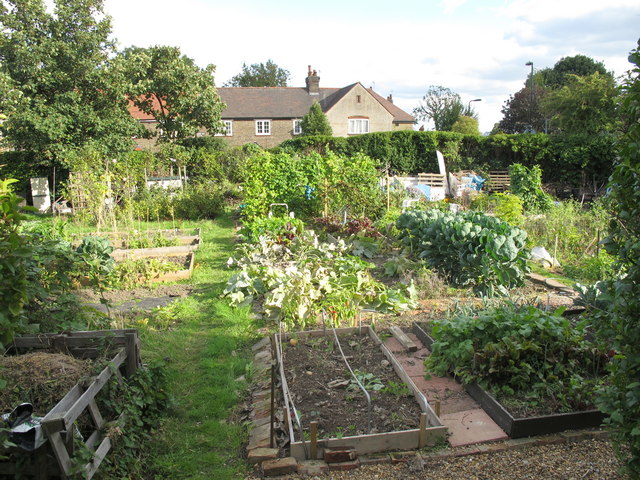
Why a plot means more than its harvest
A successful allotment may deliver peas, beans, potatoes, cut flowers and a sense of progress. It may also involve muddy paths, unfamiliar pests and a frustrating spring when seedlings fail. The reason people continue is often a combination of tangible produce and less easily priced rewards: learning a skill, managing a long-term project and having a place where conversations happen naturally. The RHS community-gardening survey reports that its sampled groups grow more than food. Flowers were reported at 69% of sites, vegetables at 61%, with fruit trees, herbs and other plants also represented. That diversity undermines the idea that every shared growing space exists solely to maximise edible output.
These experiences are not guarantees of particular health outcomes. A group may offer companionship and routine, yet it must still manage access, safeguarding where relevant and the practical safety of tools and uneven ground. Some people welcome shared activity; others need quiet independent time. A successful organisation should allow different ways of participating rather than assuming a sociable project will suit everyone.
The practical barrier is land and ongoing responsibility
People often imagine that securing a plot is the expensive part. In practice, its continuing demands can be greater than the initial arrangement. An allotment tenancy normally brings rules about cultivation and site conduct. Conditions differ by provider, so the tenant must inspect the local agreement rather than relying on general advice. Travel time, access to water, paths, storage, soil quality and the physical ability to maintain the plot all shape whether it is a realistic choice.
The RHS beginner guide suggests that a half plot is a reasonable starting point for many new growers and notes that inexperienced gardeners may spend several hours each week maintaining one. That is an indicative workload, not an obligation or a universal time budget. A plot inherited in excellent condition is very different from one with heavy weeds and failing structures. A responsible new tenant should find out what can be cleared, whether there are restrictions on structures, what waste removal is allowed and how shared resources are managed.
A community garden may solve some problems through pooled labour and shared equipment, but create others around decision-making. Who waters during holidays? Who approves purchases? Who keeps the keys? Who records a damaged tool or a change in volunteer availability? A clear written routine is more valuable than a vague expectation that somebody will do the work.
Food growing succeeds when the plot is planned for reality
Start with sunlight, drainage, soil condition and the availability of water, not an ambitious catalogue of crops. Leafy vegetables, perennial herbs and suitable fruit can be rewarding, but their requirements differ. The RHS warns that wet clay soils can be damaged by working them in unsuitable conditions, whilst sandy soils may become difficult to manage during prolonged summer dryness. Raised beds can help certain heavy soils but require materials, suitable fill and ongoing maintenance. They are not a free solution or a guarantee of higher yields.
Prioritise paths that remain usable when carrying tools or watering cans. A composting area should be practical and agreed with the site operator. Water storage may be useful where permitted, although tanks must be positioned safely. Before planting, check for the possibility of contaminated soil, particularly on sites with an industrial history; specialist advice may be appropriate. The most successful first year can be one in which a tenant understands the soil, keeps the cultivated area manageable and learns when particular crops are actually ready.
How should a household choose its growing space?
The question is not whether a private allotment is superior to a community project, but who will maintain the land and what sort of access the household needs. The comparison below uses the responsibilities described in RHS allotment guidance and the participation patterns in Space to Grow. It is an editorial decision framework, not a ranking of yield, costs or wellbeing.
Allotment, community plot or containers at home?
Match the growing space to time, access and the degree of independent responsibility the gardener can reasonably accept.
| Decision | Individual allotment | Community garden | Home containers |
|---|---|---|---|
| Access | Apply to the relevant site operator; waiting lists may apply | Ask the group about membership, sessions and availability | Requires suitable outdoor space and permission where needed |
| Who maintains it? | Plot holder under site agreement | Shared team under group arrangements | Householder or their appointed helper |
| Range of crops | Varies with plot size, soil and rules | Depends on shared priorities and layout | Suited to selected herbs, salads and compact plants |
| Main challenge | Travel, consistent cultivation and site obligations | Shared governance, volunteers and continuity | Limited soil volume and frequent watering |
| First enquiry | Request the tenancy conditions | Ask about joining and practical responsibilities | Check light, drainage and accessible containers |
Practical interpretation: an allotment suits someone who wants independent control and can maintain the plot regularly; a community garden suits those who value shared work; home containers offer a modest start without a separate journey. Availability and access differ locally, and none automatically delivers a cheaper food basket.
Where local gardening trades can make a real contribution
A gardening business might prepare safe paths, repair beds, clear an authorised area, improve soil or install accessible growing spaces. These are finite services with measurable deliverables. The contractor should check landownership and site rules before quoting: a tenant may not have authority to order major ground works, remove a tree or install permanent structures. Quotations should identify materials, access, waste disposal, aftercare and who takes responsibility for watering. A low-cost installation that immediately becomes unusable has failed the customer.
Community groups may also need periodic support rather than a grand redesign. Examples include maintaining shared tool stores, creating a planting plan volunteers can understand or resolving drainage and accessibility constraints. Paid services should fit the group's actual resources and avoid displacing the activities that participants enjoy doing. A good contractor can teach volunteers how to maintain a new bed, leaving a record that remains useful after the visit.
Can shared growing spaces contribute to Britain's economy?
They can contribute to local wellbeing, useful skills and some demand for gardening goods and services, but the economic case should not be exaggerated. Community gardening is not identical to commercial horticultural output. The RHS's wider State of Gardening Report 2025 describes an extensive horticulture economy; its estimates must not be counted as revenue produced by allotment tenants. A council or charity assessing value might consider participation, access, continuity and environmental care alongside the modest quantities of food grown.
At a practical level, the strongest opportunity is to make participation possible for more people and to maintain spaces that communities can look after. The next sensible action is to contact the actual site operator, read its agreement, visit in wet as well as dry conditions and decide what level of responsibility fits. A cultivated plot is worthwhile only when the people using it can keep it going long after the initial enthusiasm.